
The Silent Load: Ice, Wind, and the Aluminum Breaking Point
The Silent Load: Ice, Wind, and the Aluminum Breaking Point

- A failed DXpedition on two wheels
- Ten shack safety best practices
- Elecraft K4 Transceiver; just how good?
- The K-Index and Amateur Radio: Understanding its Impact on HF Propagation
- The Silent Load: Ice, Wind, and the Aluminum Breaking Point
As we batten down the hatches for the system bearing down on us tonight — 2026-01-24 — what meteorologists are already flagging as a significant nationwide event, it is a prudent moment to review the physics of winter survival for our antenna farms. We often talk about RF safety and grounding, but the mechanical survivability of our arrays under ice and wind loading is a topic that usually only gets attention after the damage is done. With the forecast for tonight looking grim across the U.S. and Canada, we need to look at the specific failure modes we are about to risk.
The Physics of the “White Load”
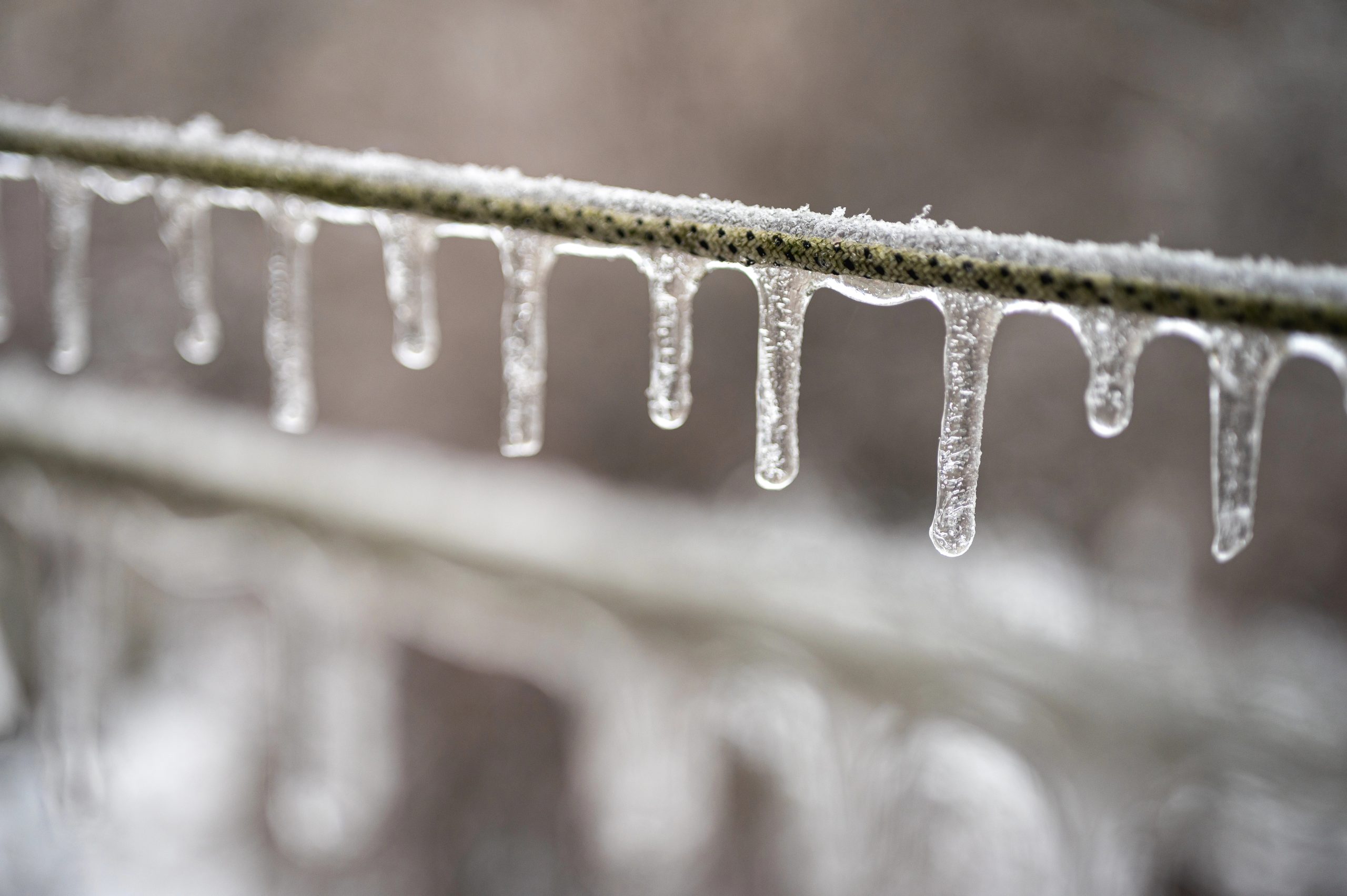
The danger to our antennas is rarely just the weight of the ice or the speed of the wind; it is the compound multiplier of the two. We tend to underestimate ice because we judge it by linear thickness, but ice accumulates radially. A simple wire antenna with a diameter of 2mm that accumulates 12mm of radial ice does not just become heavier; its wind profile expands by a factor of 7 to 10. You are essentially replacing your wire with a rigid pipe, yet the tensile strength remains that of the copper or steel-core wire.
The most destructive force for wire antennas during a storm like tonight’s is “aerodynamic instability,” often called galloping. When ice forms a tear-drop shape on a wire, it creates an airfoil. A steady wind can lift this “wing” until gravity stalls it, causing it to slam down. This low-frequency, high-amplitude oscillation snaps copper strands and shatters ceramic insulators faster than static weight ever could.
Specific Dangers by Antenna Type
For wire antennas like dipoles, end-feds, and loops, copper’s natural softness becomes a liability. Under heavy ice load, a resonant dipole cut for 3.7 MHz may physically stretch, permanently detuning it to a lower frequency even after the ice melts. The weakest link is often the end insulator; if water penetrates micro-cracks in old plastic or ceramic and then freezes, the expansion—known as cryofracture—will split the insulator and drop the line. Furthermore, a coating of ice changes the dielectric constant surrounding the wire, which will likely cause your SWR minimum to shift downward in frequency as the antenna appears “electrically” longer. Do not retune your tuner to force a match at high power, as the high SWR combined with the resistive ice layer can cause arcing or burn-through.
Aluminum yagis and beams face a different set of risks. Aluminum has a “memory” up to its yield point, but once the weight of ice bends an element past its elastic limit, it will not return to horizontal, creating the “dead spider” look common after major storms. As elements load with ice, the torque applied to the boom-to-mast clamp increases exponentially. In 20-meter or 40-meter beams, this can easily shear the mounting bolts or crush the mast wall.
Vertical antennas are particularly susceptible to guying asymmetry. If you use synthetic guys like Dacron or rope, they may stretch under ice load. If one guy line stretches more than the others due to uneven wind exposure, the vertical element will lean, creating a catastrophic bending moment at the base bracket. Additionally, you may hear a rhythmic “popping” or a high noise floor rising to S9+ before the snow even settles. This is Precipitation Static, or P-Static, caused by charge building up on the sharp tips of your vertical until it discharges into the air via corona discharge.
Human Safety: The “Widowmaker” Factor
We must be blunt about the human risk. A 50-foot tower shedding a 1-inch sheet of ice creates a kill zone. The terminal velocity of a jagged chunk of ice is sufficient to cause fatal head injuries, so no one should be within the drop radius of a tower or wire run during the thaw cycle. Furthermore, if you see a tower member bowing or a guy wire snapping, do not approach. The stored potential energy in a failing tower is immense and unpredictable.
Preventative Measures & Mitigation
While we cannot stop the weather, we can mitigate the damage. For wire antennas, slack is life; if you have a pulley system, lower the tension now, as taut wires snap while slack wires survive. Disconnect coax from the radio immediately. If a static discharge or direct lightning strike occurs within the snow bands — a phenomenon known as thundersnow — you want that energy grounded outside, not inside your shack. Finally, use binoculars to check for ice buildup from a distance. Do not bang on guy wires to “shake off” the ice, as the sudden vibration can cause brittle metal fatigue failure.
We are looking at a scenario tonight that echoes the Great Ice Storm of 1998. That event crippled the electrical grid from Ottawa to Maine, toppling thousands of transmission towers that were rated for far higher loads than our amateur gear. In that storm, the amateur radio community was the last line of defense when the grid went black. Tonight’s storm has the potential to produce similar icing events. Monitor your SWR. If it starts to wander, the ice is winning. Shut it down, disconnect, and wait for the thaw.
Stay safe, warm, and ready to transmit when the ice clears.
Author

We believe that AI has much to offer in terms of research and creativity. This said, using it requires both care and clarity. To this end, we ask that our authors disclose if they have used generative AI, and to what extent: No AI was used for this article